HomeDecor & DesignTraditional Japanese Bedroom: A Complete Guide to Minimalist, Calm, and Timeless Interior Design
Traditional Japanese Bedroom: A Complete Guide to Minimalist, Calm, and Timeless Interior Design
July 2, 2026
A traditional Japanese bedroom is more than just a design style—it is a philosophy of living. It focuses on simplicity, balance, and a deep connection with nature. As an interior design blogger who has worked with both modern apartments and compact homes, I’ve seen how this style transforms not only a room but also the way people feel inside it.
In many of my projects, clients often say they want a space that feels “calm, clean, and mentally light.” That’s exactly where Japanese interior design naturally fits in.
In this guide, I’ll walk you through the essential elements, design principles, modern adaptations, and a real-life case study so you can understand how to create a peaceful bedroom inspired by Japanese aesthetics.
Content
What Defines a Traditional Japanese Bedroom?
At its core, a traditional Japanese bedroom is built on minimalist bedroom design principles. Everything has a purpose, and unnecessary objects are removed to create open space and mental clarity.
This style is deeply connected to Zen bedroom style, where simplicity is not emptiness—it is clarity.
Core Elements of Traditional Japanese Bedroom Design
To understand how this design works in real life, let’s break it down into its essential components.
1. Tatami Room Design Foundation
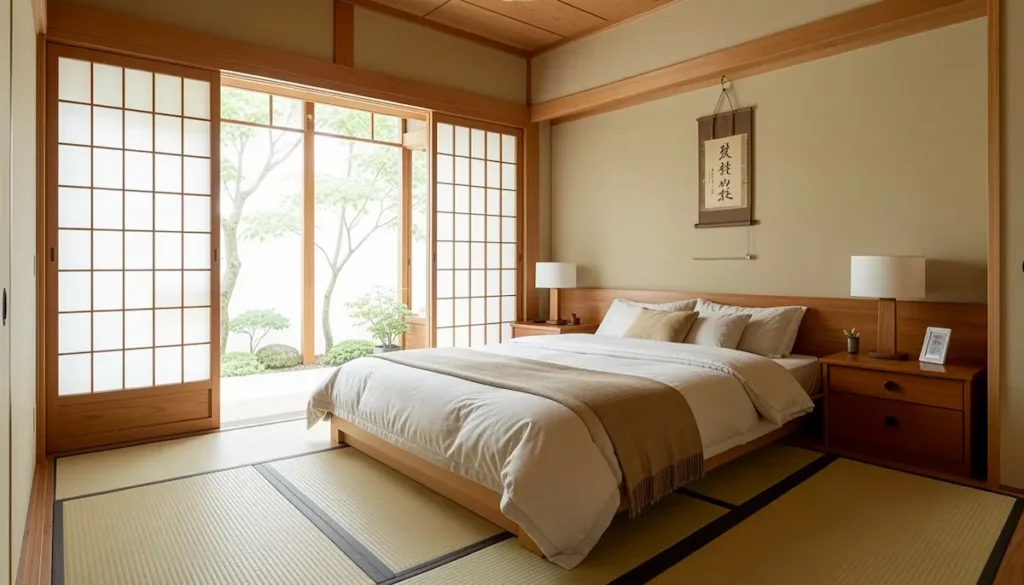
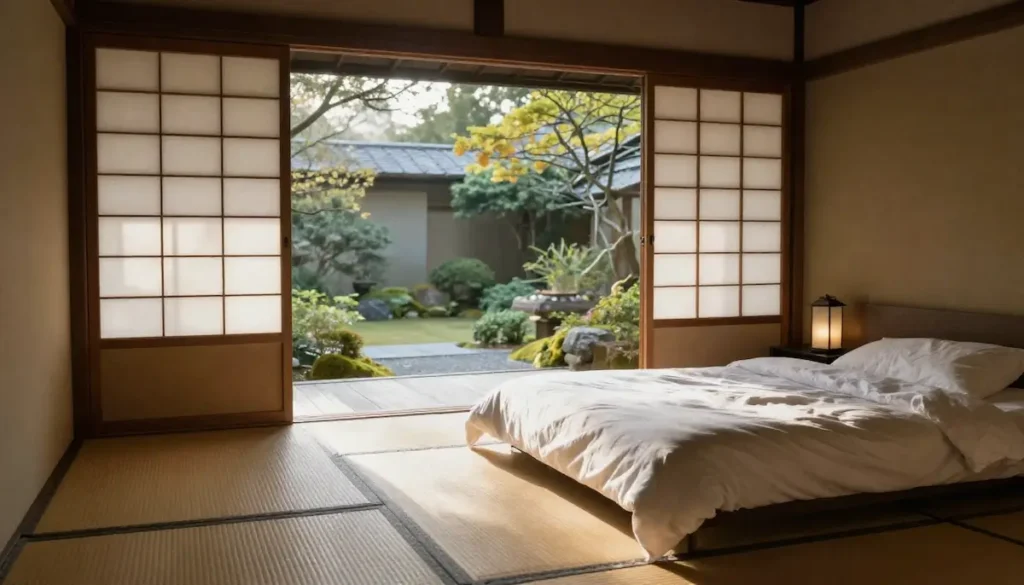
A traditional Japanese bedroom often starts with tatami flooring. These mats define the space and bring a natural, earthy feel. They also help regulate temperature and create a soft walking surface.
2. Futon Bed Setup for Flexibility
Instead of a permanent bed frame, a futon is laid out at night and stored during the day. This creates flexible space and supports the idea of living in a multi-purpose room.
3. Sliding Shoji Doors
Shoji doors are one of the most recognizable elements of Japanese bedroom design inspired by Zen philosophy. They allow natural light to pass through while maintaining privacy and softness.
4. Natural Materials Decor
Wood, bamboo, rice paper, and linen dominate the material palette. This creates harmony with nature and enhances the calming effect of the room.
5. Low Furniture and Open Space
Low tables or storage units maintain visual balance and ensure the room never feels crowded.
Why This Design Feels So Peaceful
The reason people are drawn to this style is simple—it reduces visual stress.
A setup for peaceful sleep environment works because:
Fewer objects reduce mental distraction
Natural materials promote relaxation
Soft lighting improves sleep quality
Open space improves breathing comfort
In modern psychology, this aligns with the idea that a clutter-free environment supports a calmer mind.
How to Create a Traditional Japanese Bedroom at Home
If you are wondering how to create a Japanese-style bedroom at home, the process is simpler than most people think.
Start with these steps:
Step 1: Clear the Space
Remove unnecessary furniture and décor. Minimalism is the foundation.
Step 2: Choose Natural Flooring or Rugs
If tatami is not possible, use natural fiber rugs to recreate the feel.
Step 3: Switch to Low Furniture
Replace bulky beds with floor mattresses or low platforms.
Step 4: Use Soft Lighting
Warm lighting enhances the Zen atmosphere.
Step 5: Keep Decor Minimal
Choose only meaningful or functional décor items.
This approach helps achieve an authentic traditional Japanese bedroom ideas for modern apartments style even in small urban spaces.
Design Variations for Modern Homes
While these bedrooms are rooted in history, they have evolved into modern adaptations.
Minimalist Japanese Bedroom Style
Focuses on clean lines, neutral colors, and empty space.
Wabi-Sabi Interior Style
This embraces imperfection and natural aging of materials.
Modern Hybrid Japanese Bedroom
Combines Western beds with Japanese aesthetics.
These variations make it easier for people living in cities to enjoy design ideas for small spaces without completely changing their lifestyle.
Authentic Japanese Bedroom Design Elements Explained
To truly understand this style, you need to recognize its deeper philosophy.
Simplicity over decoration
Nature over artificial materials
Functionality over excess
Calmness over stimulation
This is what makes authentic Japanese bedroom design elements explained so powerful—it is not just visual, but emotional.
Real-Life Case Study: Transforming a Small Apartment Bedroom
One of my most memorable projects involved a client named Ali, who lived in a small 1-bedroom apartment in an urban city. His bedroom was cluttered with heavy furniture, bright LED lights, and limited walking space.
Problem:
Room felt cramped and stressful
Poor sleep quality
Too many unnecessary items
Solution:
We redesigned the space using traditional Japanese bedroom ideas for modern apartments:
Removed the bulky bed and replaced it with a futon
Introduced light wooden flooring and neutral tones
Installed sliding-style curtains to mimic shoji doors
Reduced décor to only two meaningful items
Added soft warm lighting
Result:
Within one week, Ali reported:
Better sleep quality
Reduced stress levels
A feeling of “mental space” in the room
He described it as:
“It feels like I finally have room to breathe.”
This transformation showed how powerful Japanese bedroom design inspired by Zen philosophy can be, even in small urban apartments.
Benefits of a Traditional Japanese Bedroom Lifestyle
Beyond aesthetics, this style brings real lifestyle benefits:
Improved sleep quality
Reduced mental clutter
Easier cleaning and maintenance
Stronger connection to nature
More mindful living habits
It is not just design—it is a lifestyle shift.
Final Thoughts
A traditional Japanese bedroom represents more than just interior design—it is a way of living with intention. By embracing simplicity, natural materials, and minimalism, you create a space that supports both physical comfort and mental clarity.
Whether you are inspired by wabi-sabi interior style, Zen bedroom style, or modern minimalist living, this design philosophy can easily adapt to your home.
Even small changes—like reducing clutter or switching to natural materials—can begin your transformation toward a calmer, more balanced space.
If your goal is to create a bedroom that feels peaceful, grounded, and timeless, the Japanese approach remains one of the most effective design styles in the world today.
FAQ’s:
What is a traditional Japanese bedroom called?
A traditional Japanese bedroom is often called a “washitsu,” meaning a Japanese-style room with tatami flooring and futon bedding.
What does 7 mean in Japanese culture?
In Japanese culture, the number 7 symbolizes good fortune and spirituality, and is often linked to festivals and traditional beliefs.
What is a tatami room?
A tatami room is a traditional Japanese room covered with woven straw mats used for sleeping, relaxing, and minimalist living.
What is a Japanese style bedroom?
A Japanese style bedroom is a minimalist space using natural materials, low furniture, and Zen-inspired design for calm and simplicity.
Connie is a dedicated home improvement blog author who has a passion for writing. She enjoys blogging about all sorts of topics, from interior design to landscaping and more! She loves the outdoors and spending time in nature with her family. She also likes to bake in her free time.
Connie is a dedicated home improvement blog author who has a passion for writing. She enjoys blogging about all sorts of topics, from interior design to landscaping and more! She loves the outdoors and spending time in nature with her family. She also likes to bake in her free time.