Transitional Home Decor: Blending Classic & Modern
May 14, 2026
Design trends come and go, but some styles remain timeless because they combine the best of different worlds. One of the most popular interior styles today is transitional home decor. This approach blends traditional elegance with modern simplicity, creating spaces that feel both sophisticated and comfortable.
If you have ever admired homes that look refined yet relaxed, chances are you were looking at interiors that strike a balance between classic details and contemporary elements, making them perfect for homeowners who don’t want their space to feel too formal or overly minimal.
In this guide, we’ll explore how this style works, share practical examples and tips, and include a real-life case study that demonstrates how it can transform everyday living spaces.
Content
Understanding Transitional Home Decor Style
At its core, transitional home decor is about balance. Instead of choosing between traditional and modern design, this style merges the two to create a harmonious and welcoming interior.
Traditional decor often features ornate details, dark wood furniture, and classic patterns. Modern decor, on the other hand, focuses on clean lines, minimalism, and simple color palettes. Transitional design sits comfortably in the middle.
The result is a modern traditional home style that feels timeless rather than trendy.
Some key characteristics include:
Neutral color palettes
Clean lines with subtle curves
Comfortable furniture with elegant details
Minimal yet meaningful accessories
A mix of traditional craftsmanship and modern finishes
Many homeowners love this approach because it creates elegant transitional interiors that remain stylish for years.
Key Characteristics of Transitional Home Decor and Interior Design
To better understand this style, it helps to look at the main elements that define contemporary classic interior design.
Neutral and Balanced Color Palettes
One of the first things you’ll notice in transitional home decor is the use of soft, neutral colors. Shades like beige, taupe, gray, cream, and warm white dominate the palette. These colors create a calm backdrop that allows furniture and decor pieces to stand out. Accent colors may appear through pillows, artwork, or decorative objects, but they are usually subtle rather than bold.
Clean Lines With Subtle Details
Unlike traditional interiors that may feel ornate, transitional spaces focus on simplicity.
Furniture often has:
straight silhouettes
gentle curves
minimal decorative carvings
This combination creates a timeless interior design style that looks refined without feeling heavy.
Texture Over Pattern
Another defining feature of transitional spaces is the use of texture.
Instead of busy prints, designers use materials like:
linen
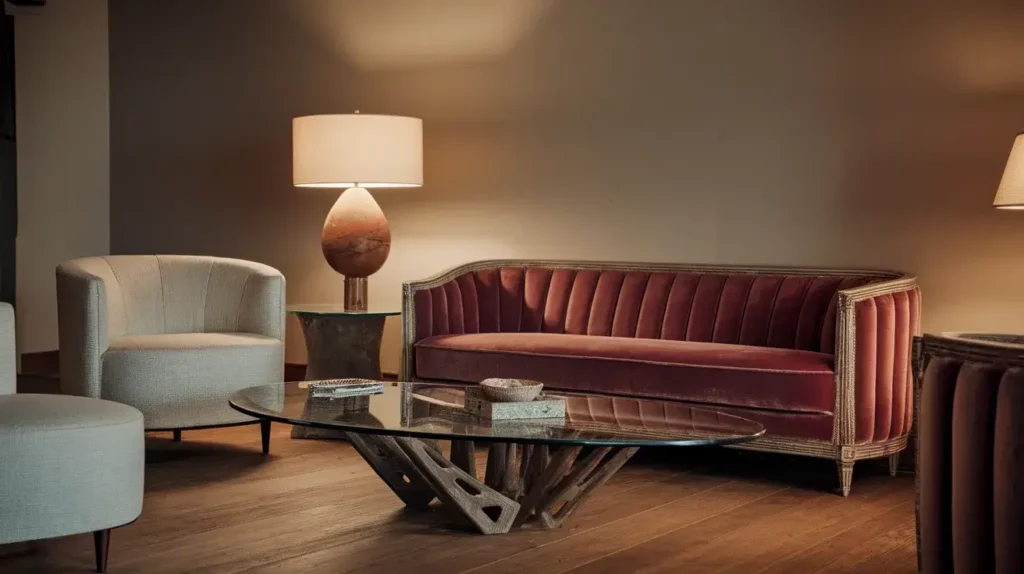
velvet
wood
glass
metal
These textures add depth and interest while maintaining a calm and cohesive look.
Color Palette Ideas for Transitional Interiors
Color plays an important role in creating the right atmosphere. Many designers rely on neutral tones when planning transitional home decor color palette ideas.
Some popular combinations include:
Warm white with soft gray accents
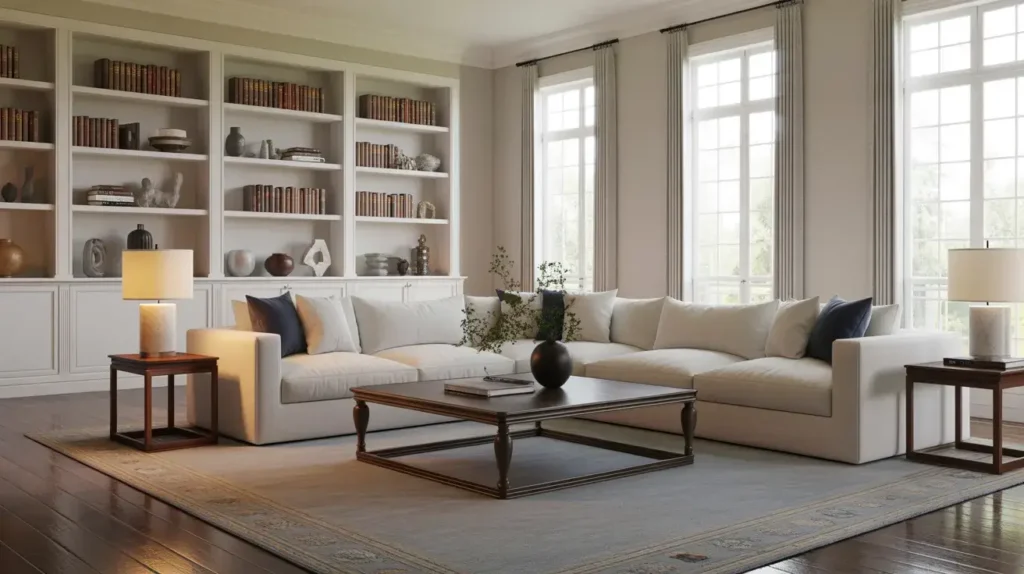
Beige paired with dark wood tones
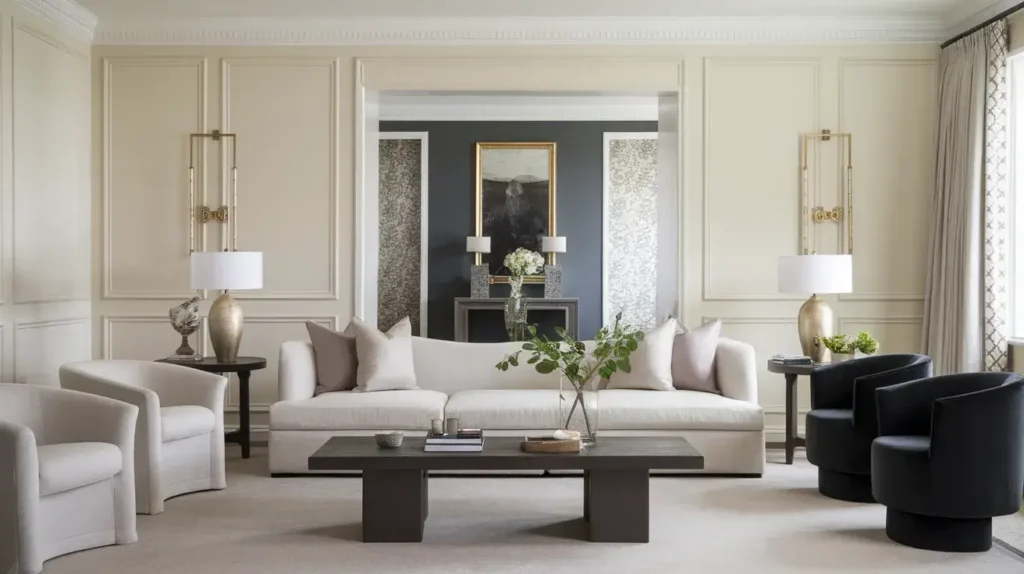
Taupe mixed with brushed gold or brass finishes
Cream walls with charcoal furniture
This approach ensures the space feels cohesive and sophisticated.
A simple trick I often recommend is using a three-tone palette: a dominant neutral color, a secondary shade, and a subtle accent.
For example:
Cream walls
Light gray sofa
Dark wood coffee table
This keeps the design balanced and visually appealing.
Furniture Choices for Transitional Interiors
Furniture plays a major role in achieving the right look. Choosing the right pieces is essential when planning the layout and style of transitional interiors.
Sofas and Seating
The sofa usually acts as the centerpiece of a living room. Transitional sofas often feature:
clean lines
neutral upholstery
plush cushions
Instead of ornate carvings, they rely on shape and texture to create elegance.
Coffee Tables and Side Tables
Tables are a great opportunity to blend traditional and modern elements.
For example:
A classic wooden coffee table paired with a sleek metal lamp
A glass table with vintage-inspired legs
This contrast perfectly captures the essence of modern traditional home style
Lighting Fixtures
Lighting can instantly elevate the room. Transitional homes often combine classic forms with modern materials.
Examples include:
chandeliers with simple geometric shapes
brushed metal pendant lights
table lamps with neutral shades
These pieces help create elegant transitional interiors without overpowering the room.
Transitional Home Decor Ideas for Living Room
The living room is often the best place to showcase this style. To create a balanced look, focus on layering different elements while maintaining harmony in the design.
Here are some simple ideas:
Mix Old and New Furniture
Pair a traditional wooden console table with a modern sofa. This mix creates visual interest while maintaining harmony.
Use Statement Artwork
Artwork can act as a focal point. Large abstract paintings work beautifully in transitional interiors because they contrast nicely with classic furniture pieces.
Add Layered Textures
Combine fabrics like linen curtains, velvet cushions, and woven rugs. This creates depth without overwhelming the space.
Keep Accessories Minimal
Instead of filling shelves with decor, choose a few meaningful pieces such as:
ceramic vases
books
sculptures
This approach keeps the room elegant and uncluttered.
How to Decorate a Home in Transitional Style
Many homeowners ask how to decorate a home in transitional style without hiring a professional designer. The good news is that this design approach is surprisingly flexible.
Here are some practical tips:
Start With Neutral Foundations
Choose neutral colors for walls, large furniture pieces, and flooring. This creates a clean base for the rest of the design.
Balance Classic and Contemporary Pieces
Avoid going too far in one direction. If your furniture feels very traditional, add modern lighting or artwork to balance it.
Focus on Comfort
Transitional spaces should feel welcoming. Comfortable sofas, soft rugs, and warm lighting help create an inviting atmosphere.
Choose Quality Over Quantity
Instead of filling the room with many decorative items, invest in a few well-designed pieces.
This approach ensures the space feels polished rather than cluttered.
Real-Life Case Study: A Transitional Living Room Transformation
A few years ago, one of my friends asked for help redesigning her living room. She loved traditional furniture but also admired modern interiors she saw online.
Her biggest concern was that her space felt outdated and heavy.
We decided to experiment with transitional home decor.
First, we replaced her dark patterned curtains with soft beige linen panels. Then we swapped the bulky coffee table for a sleek wooden one with clean lines.
Next, we added a modern floor lamp and a large abstract painting above the sofa.
The final touch was a neutral area rug that tied everything together.
The transformation was remarkable.
The room still felt warm and classic, but it now looked brighter, more modern, and incredibly inviting.
This experience perfectly demonstrated how transitional interior design allows homeowners to refresh their space without completely abandoning their existing furniture.
Common Mistakes to Avoid
While transitional design is flexible, a few mistakes can disrupt the balance.
Mixing Too Many Styles
Combining too many different design styles can make the room feel chaotic.
Stick to a clear balance between traditional and modern elements.
Overdecorating
Too many accessories can make the space look cluttered. Transitional interiors thrive on simplicity.
Ignoring Texture
Texture is essential in this design style. Without it, the room may feel flat or dull.
Why This Style Is So Popular
The popularity of this design style continues to grow because it offers something many homeowners want: flexibility.
This style works well for people who appreciate tradition but also want their home to feel fresh and modern.
It is also incredibly versatile. Whether you live in a small apartment or a spacious house, the principles of contemporary classic interior design can be adapted to suit your space.
Most importantly, it creates a timeless interior design style that doesn’t feel outdated after a few years.
Final Thoughts
Creating a beautiful home doesn’t mean choosing between traditional elegance and modern simplicity. With transitional home decor, you can enjoy both.
By combining neutral colors, clean-lined furniture, and carefully chosen textures, you can design a space that feels sophisticated, welcoming, and timeless.
Whether you’re redesigning a single room or your entire home, experimenting with transitional interior design can help you achieve a balanced and stylish environment that reflects your personal taste. For more information visit our website home2choose
FAQ’s:
Is transitional home decor suitable for small homes?
Yes. Transitional home decor works well in small spaces because neutral colors and simple furniture make rooms feel open and balanced.
What materials are common in transitional interior design?
Transitional interior design often uses wood, glass, metal, linen, and velvet to create layered textures while keeping a clean and elegant look.
Can transitional home decor work with modern furniture?
Yes. Transitional home decor blends modern furniture with classic pieces to create a balanced modern traditional home style.
Why is transitional home decor considered timeless?
Transitional home decor mixes classic elements with modern design, creating a timeless interior design style that doesn’t feel outdated.
Connie is a dedicated home improvement blog author who has a passion for writing. She enjoys blogging about all sorts of topics, from interior design to landscaping and more! She loves the outdoors and spending time in nature with her family. She also likes to bake in her free time.
Connie is a dedicated home improvement blog author who has a passion for writing. She enjoys blogging about all sorts of topics, from interior design to landscaping and more! She loves the outdoors and spending time in nature with her family. She also likes to bake in her free time.