HomeGarage DoorHow Do You Choose the Best Garage Door Lubricant for Smooth Operation?
How Do You Choose the Best Garage Door Lubricant for Smooth Operation?
July 31, 2026
A noisy garage door can be more than just an annoyance—it may be an early sign that your garage door needs proper maintenance. Over time, the moving parts of a garage door experience friction, dust buildup, and wear that can lead to squeaking, grinding, or even costly repairs. Fortunately, using the right garage door lubricant is one of the easiest and most affordable ways to keep your garage door operating smoothly.
As someone who has helped homeowners troubleshoot common garage door problems, I’ve found that many issues can be prevented with regular garage door lubrication. Whether you have a sectional, roll-up, or overhead garage door, choosing the right lubricant and applying it correctly can extend the life of your system while reducing noise and unnecessary wear.
In this guide, you’ll learn how to choose the right product, where to apply it, what products to avoid, and how regular maintenance can keep your garage door in excellent condition.
Content
Why Garage Door Lubricant Is Important
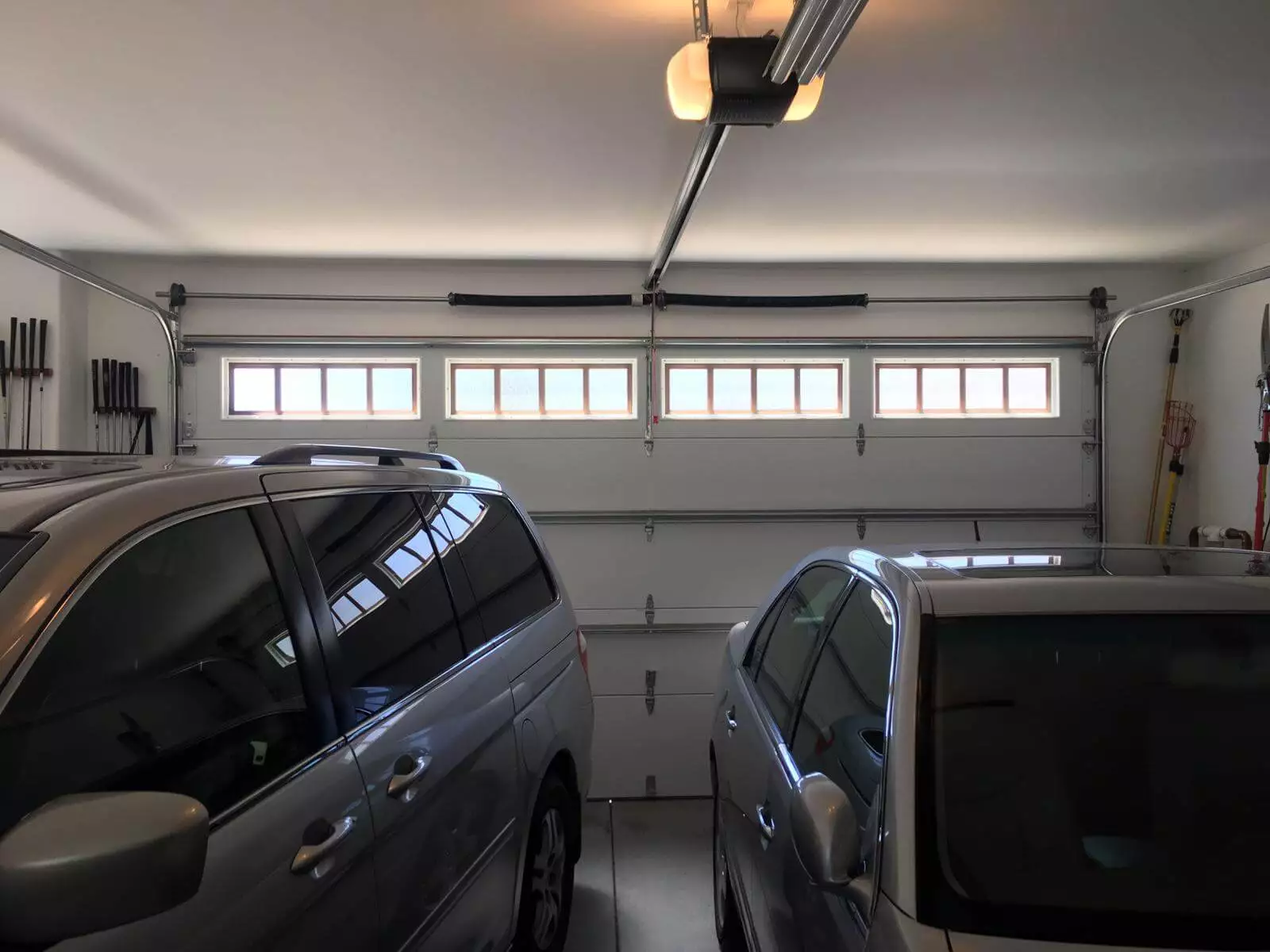
Every time you open or close your garage door, dozens of moving parts work together. Rollers glide along tracks, hinges pivot, springs absorb tension, and bearings rotate under pressure. Using the right garage door lubricant helps reduce friction, protect these components from premature wear, and keep the entire system operating efficiently.
Regular garage door maintenance offers several benefits:
Reduces squeaking and grinding noises.
Improves smooth garage door operation.
Minimizes friction between moving parts.
Helps prevent rust and corrosion.
Extends the lifespan of garage door components.
Reduces the likelihood of expensive repairs.
A few minutes of maintenance every few months can save you hundreds of dollars in repair costs later.
Signs You Need Garage Door Lubricant
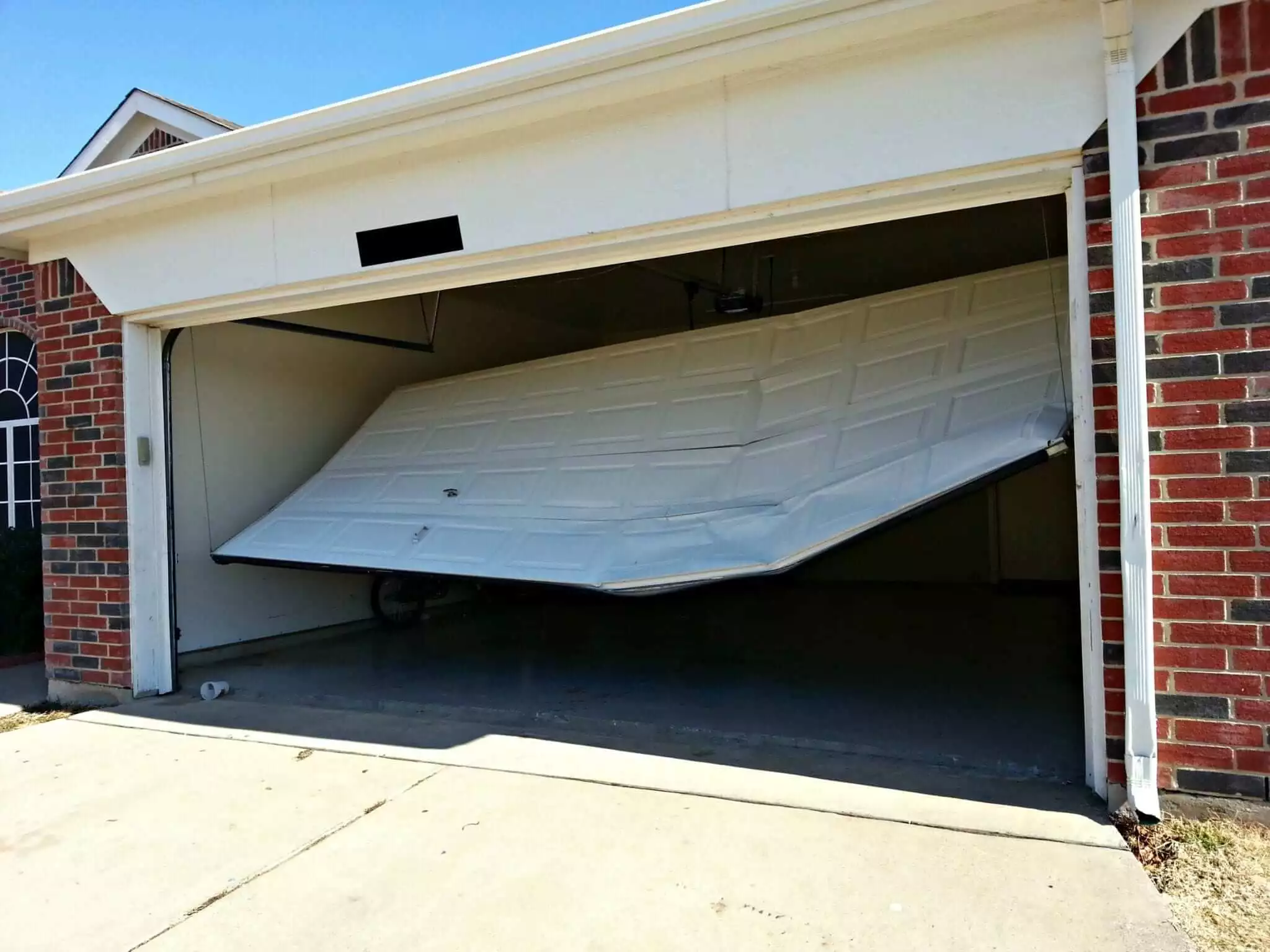
If you’re unsure whether it’s time for maintenance, watch for these common warning signs. These issues often indicate that it’s time to apply garage door lubricant to keep the moving parts working smoothly and prevent further wear.
Addressing these symptoms early can help prevent minor maintenance issues from turning into costly repairs.
How to Choose the Best Garage Door Lubricant
Not every lubricant is designed for garage doors. Using the wrong product may attract dirt or fail to protect metal components properly.
When choosing the right product, consider the following qualities:
Silicone Lubricant
A silicone-based lubricant is an excellent choice for homeowners because it creates a protective coating without attracting excessive dust or debris. It’s especially useful in humid environments where moisture can lead to rust.
White Lithium Grease
White lithium grease provides long-lasting lubrication for high-friction metal components such as hinges and springs. It stays in place longer than many spray lubricants, making it a popular option for heavy-duty garage doors.
Lubricant Spray
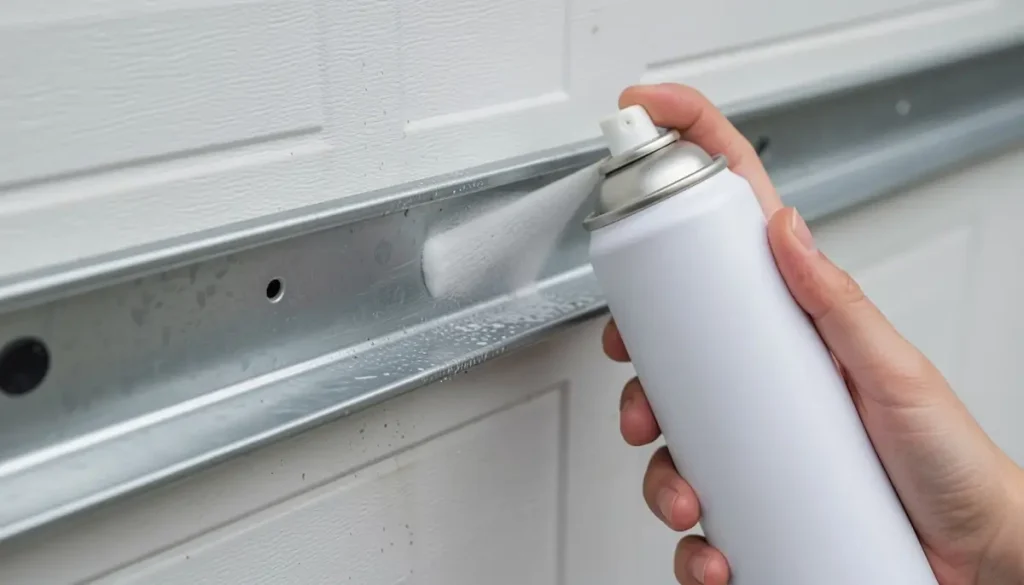
A quality lubricant spray is convenient for routine maintenance because it reaches tight spaces easily and applies evenly across moving parts.
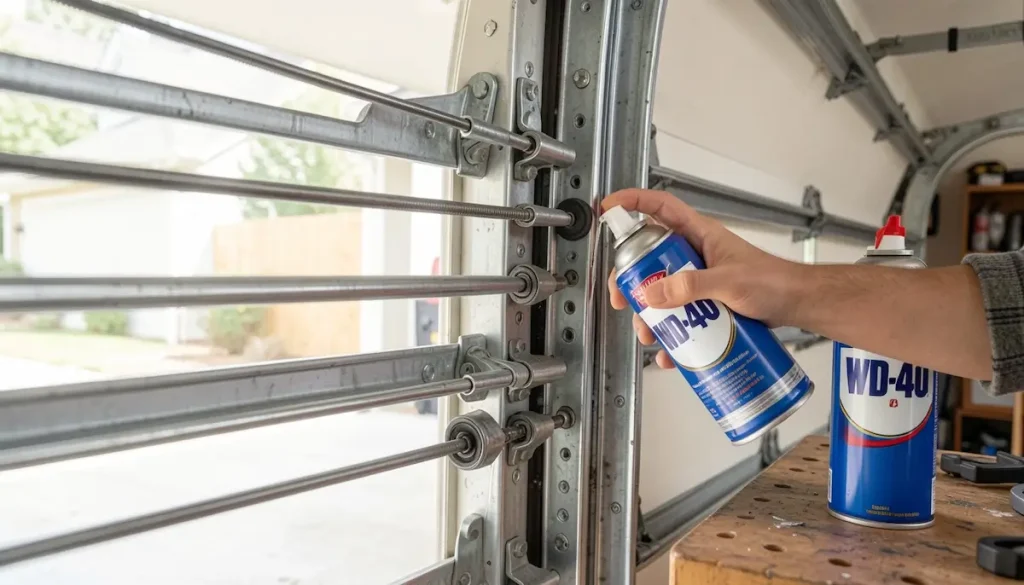
Can You Use WD-40 on a Garage Door?
One of the most common questions homeowners ask is, can you use WD-40 on a garage door?
The answer depends on the product.
Standard WD-40 is primarily a cleaner and water-displacing solution rather than a long-term lubricant. While it can loosen rusted components or remove grime, it isn’t the ideal choice for ongoing lubrication.
For lasting results, choose a lubricant specifically formulated for garage doors, such as silicone-based sprays or white lithium grease.
Where to Apply Garage Door Lubricant
Knowing where to apply the lubricant is just as important as choosing the right product.
Focus on these components:
Garage door rollers
Garage door hinges
Garage door springs
Bearings
Pivot points
Lock mechanisms
Avoid spraying lubricant directly onto the tracks. Instead, clean the tracks with a dry cloth to remove dust and debris, allowing the rollers to move smoothly without buildup.
Step-by-Step DIY Garage Door Lubrication Guide
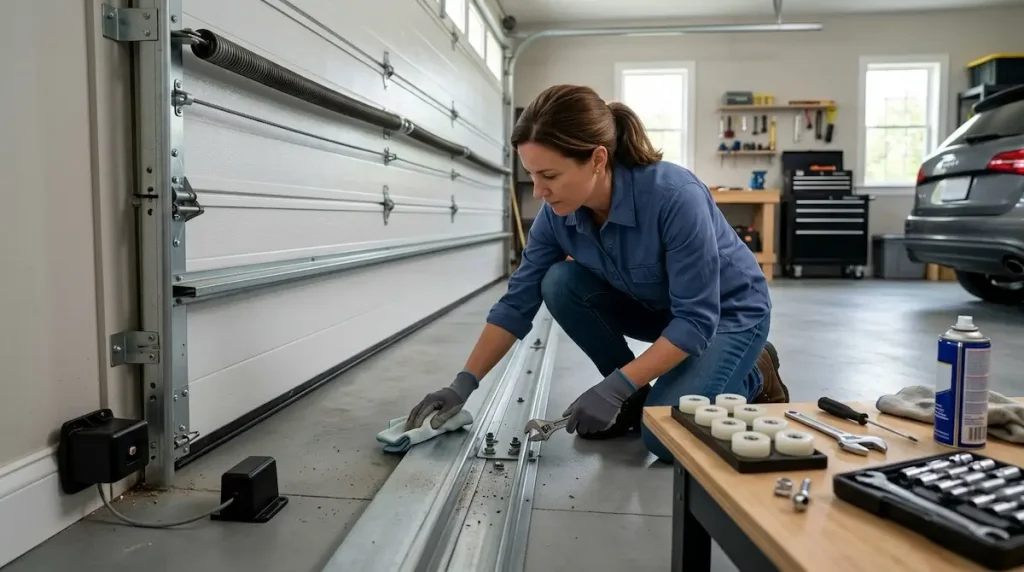
If you’re new to garage door maintenance, follow this simple DIY lubrication guide to keep your system running smoothly.
Step 1: Disconnect the Opener
For safety, unplug the automatic opener before beginning maintenance.
Step 2: Clean the Components
Use a dry cloth to remove dust, dirt, and old grease from the moving parts.
Step 3: Lubricate the Rollers
Apply the lubricant to the rollers while rotating each one by hand to ensure even coverage.
Step 4: Lubricate the Hinges
Apply the lubricant to each hinge and pivot point to reduce friction and ensure smooth movement.
Step 5: Lubricate the Springs
Carefully apply the lubricant to the springs to minimize noise and help protect them against corrosion.
Step 6: Test the Door
Reconnect the opener and open and close the garage door several times to distribute the lubricant evenly.
How Often Should You Lubricate a Garage Door?
A frequently asked question is, how often should you lubricate a garage door?
For most residential garage doors, lubrication every three to six months is sufficient.
However, you may need more frequent maintenance if:
You live in a humid climate.
The garage door is used multiple times each day.
Your garage is exposed to dust or coastal air.
The door frequently operates in freezing temperatures.
Regular inspections will help determine the ideal maintenance schedule for your home.
Common Lubrication Mistakes to Avoid
Even well-intentioned homeowners sometimes make mistakes that reduce the effectiveness of maintenance.
Avoid these common errors:
Using household oils instead of specialized lubricants.
Applying excessive lubricant that attracts dirt.
Forgetting to clean parts before lubricating.
Spraying the garage door tracks.
Ignoring worn rollers or damaged hinges.
Waiting until the door becomes noisy before performing maintenance.
Proper garage door maintenance is preventive, not reactive.
Real-Life Case Study: How Routine Lubrication Prevented a Costly Repair
Last year, a homeowner named Michael noticed his garage door making loud squeaking noises every morning. At first, he assumed the sound was normal and continued using the door for several weeks.
Eventually, the door began moving unevenly, and the opener struggled to lift it. Before calling for repairs, Michael decided to inspect the system himself. He discovered dry hinges, dusty rollers, and springs showing early signs of rust.
After thoroughly cleaning the moving parts and applying a high-quality garage door lubricant, the difference was immediate. The door operated quietly again, and the uneven movement disappeared.
A local garage door technician later confirmed that regular lubrication had likely prevented premature wear on the rollers and opener, saving Michael from a much more expensive repair. His experience highlights how a simple maintenance routine can protect both your garage door and your budget.
Extra Garage Door Maintenance Tips
To get the best results from your maintenance routine:
Inspect your garage door every few months.
Tighten loose bolts and brackets.
Replace worn rollers before they fail.
Keep tracks free from dust and debris.
Test the automatic safety sensors regularly.
Listen for unusual noises during operation.
Following these garage door lubricant maintenance tips will help your system perform reliably for years.
Conclusion
Choosing the right garage door lubricant is a simple step that can make a noticeable difference in your garage door’s performance. Whether you prefer a silicone-based lubricant, white lithium grease, or a specialized lubricant spray, the key is applying it correctly and following a regular maintenance schedule. Proper lubrication also helps reduce the need for frequent Garage Door Repair by minimizing wear on moving parts and keeping the system operating efficiently.
By understanding the proper application techniques, knowing which parts need lubrication, and avoiding common maintenance mistakes, you can reduce noise, extend the lifespan of your garage door, and improve overall safety. A few minutes of preventive care today can help you avoid expensive repairs tomorrow while ensuring your garage door continues to operate smoothly and reliably.
FAQ’s:
What is the best garage door lubricant?
The best garage door lubricant is typically a silicone-based spray or white lithium grease designed specifically for garage door components.
How often should you lubricate a garage door?
Most garage doors should be lubricated every three to six months, depending on usage and environmental conditions.
Can you use WD-40 as garage door lubricant?
Standard WD-40 is best used as a cleaner rather than a long-term lubricant. Use a garage door-specific lubricant for lasting protection.
Where should garage door lubricant be applied?
Apply lubricant to the rollers, hinges, springs, bearings, and pivot points, but avoid lubricating the tracks.
Connie is a dedicated home improvement blog author who has a passion for writing. She enjoys blogging about all sorts of topics, from interior design to landscaping and more! She loves the outdoors and spending time in nature with her family. She also likes to bake in her free time.
Connie is a dedicated home improvement blog author who has a passion for writing. She enjoys blogging about all sorts of topics, from interior design to landscaping and more! She loves the outdoors and spending time in nature with her family. She also likes to bake in her free time.